
The Hall Roof Timbers
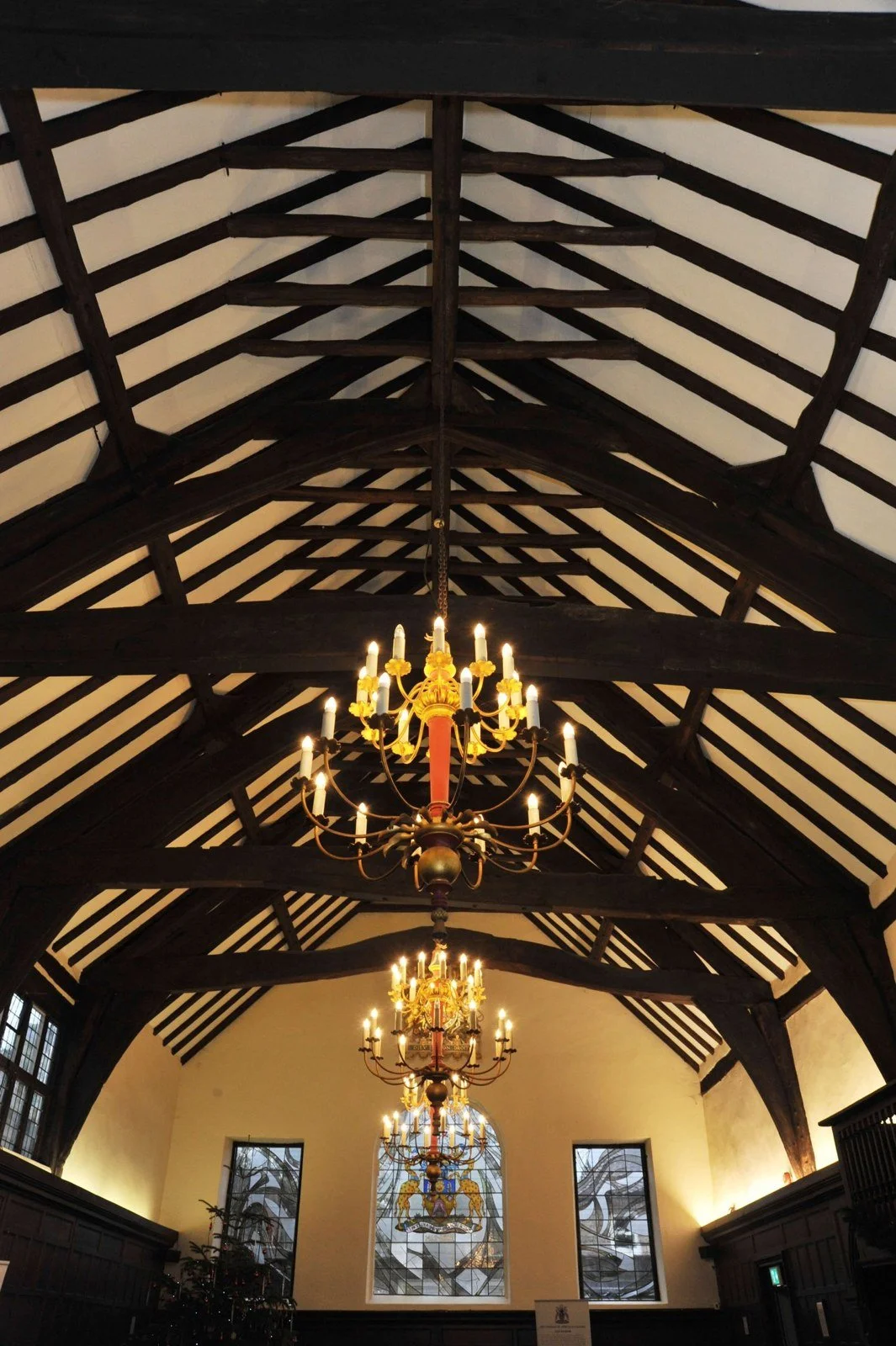
In 2012, tree-ring dating of 40 oak cores showed that the Great Hall roof timbers were felled in 1410–1413 and the Blue Hall timbers in 1425–1434. The trees had grown for nearly 200 years in woodland near York.
Notches and Slots in the Hall's Timbers
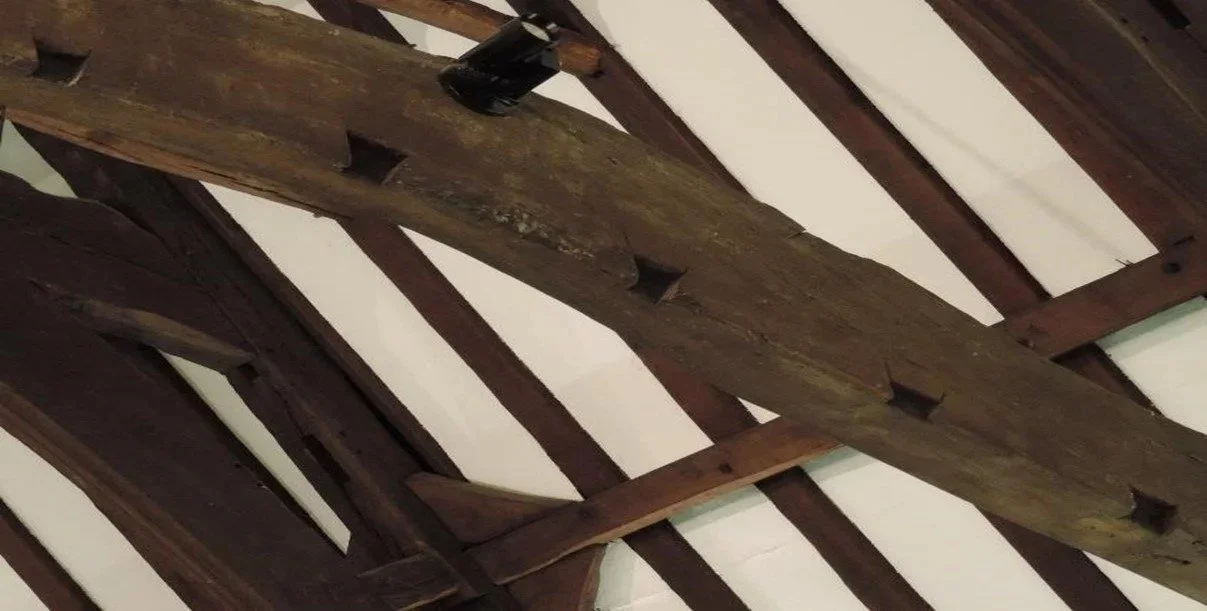
Why is one of the Great Hall's tie beams arched, with eight evenly spaced notches? The answer points to a canopy that once hung over the high table.
The Entrance Porch
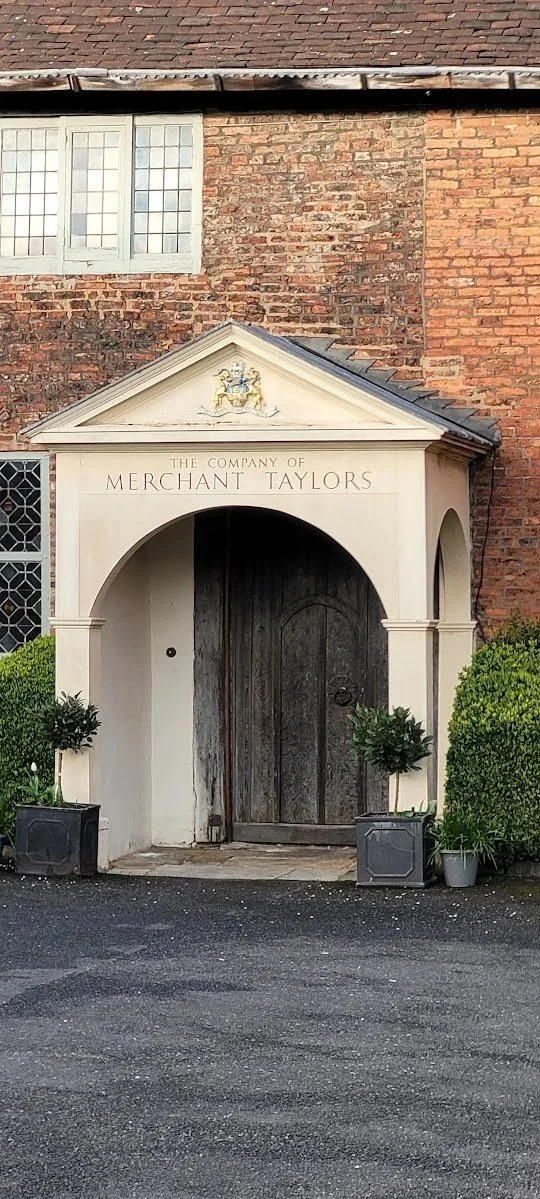
The porch protects the Hall's heavy old timber door and lines up with the medieval screens passage beyond. This is the story of its 2012 repair and its changing colours.
The Brickwork Facing to the Hall
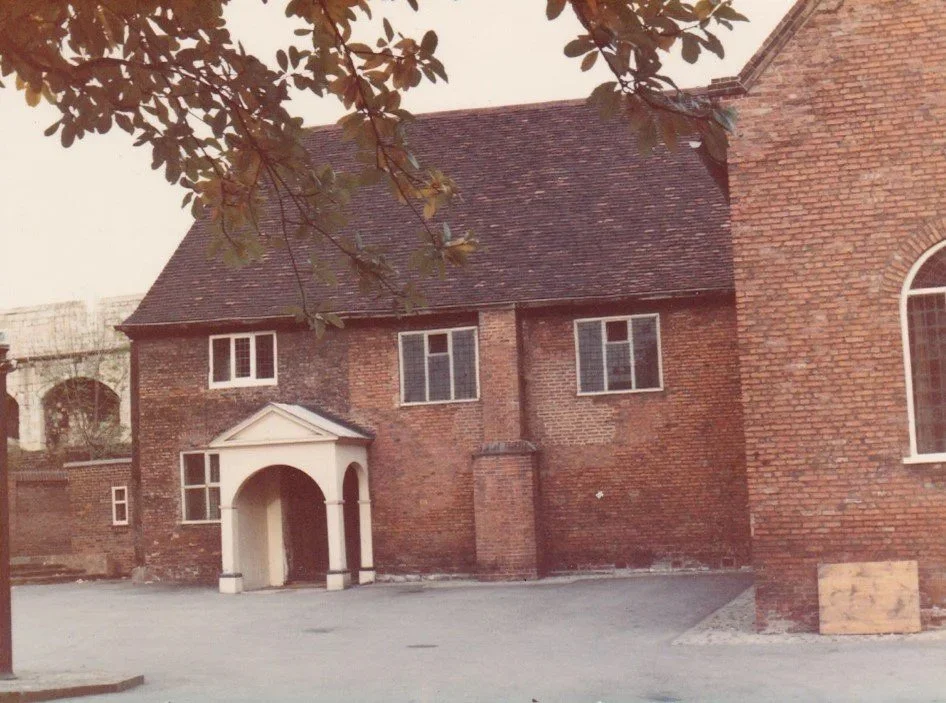
The Merchant Taylors faced their timber-framed hall in fashionable brick in two stages, in 1715 and 1730. Old photographs raise a puzzle about a buttress that looks like a chimney breast.
The Aldwark Frontage of the Hall
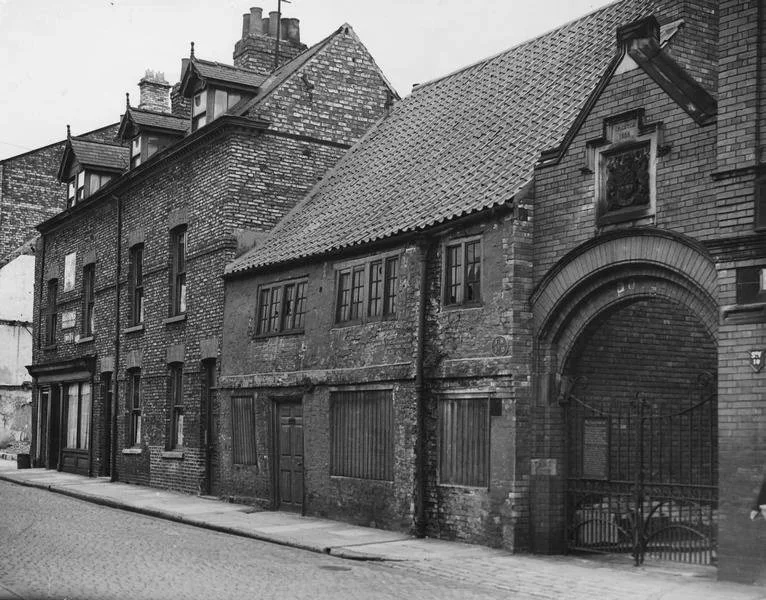
Before today's forecourt, the Hall was reached down a lane only 5 feet 9 inches wide at its narrowest. Photographs show the Rose & Crown Inn and the buildings that once stood on Aldwark.
The Great Hall Restoration
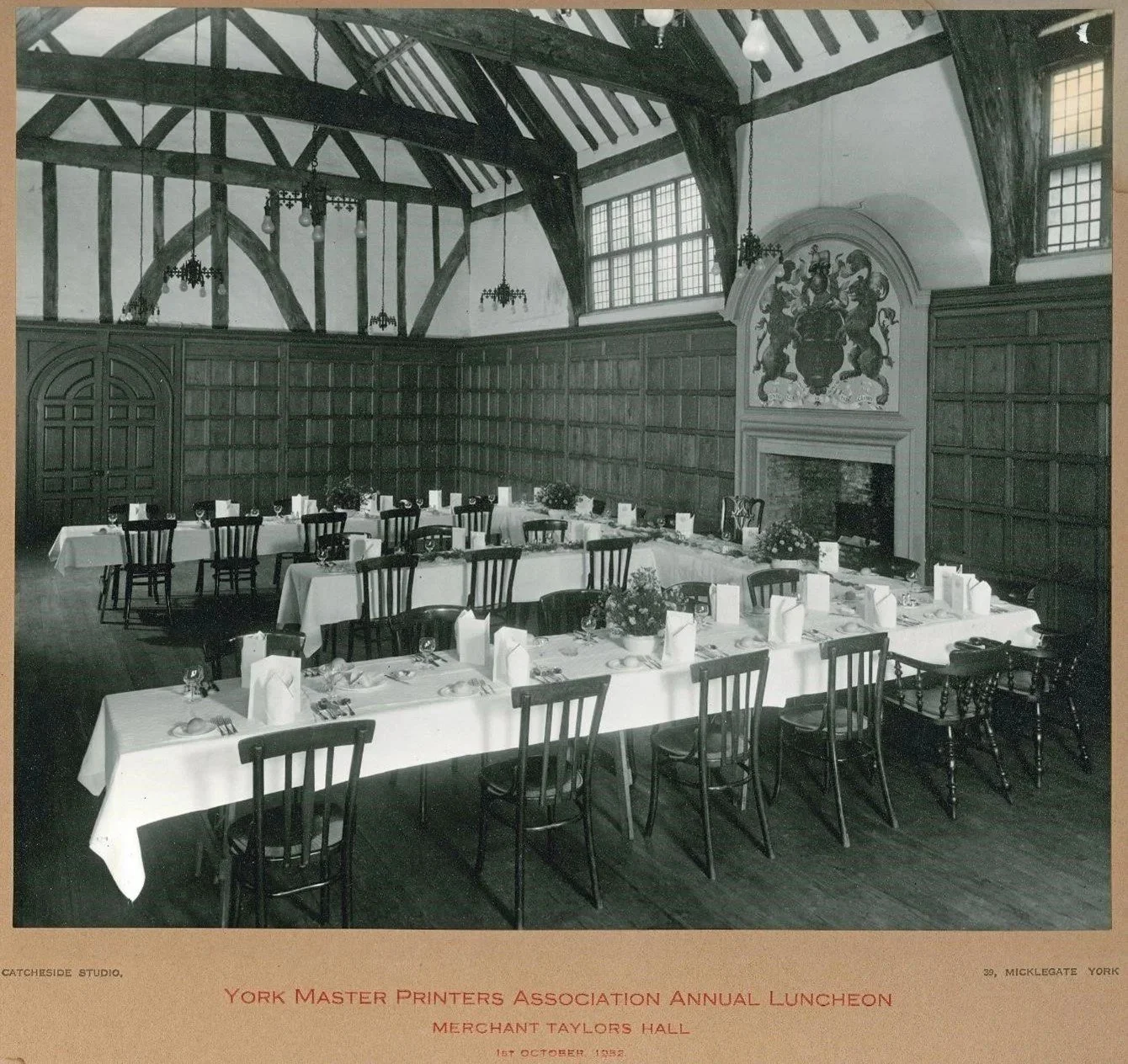
A photograph of a printers' lunch on 1 October 1952 shows the Great Hall soon after its major restoration of 1948 to 1951. Many details in it have since changed.
The Great Hall Lighting
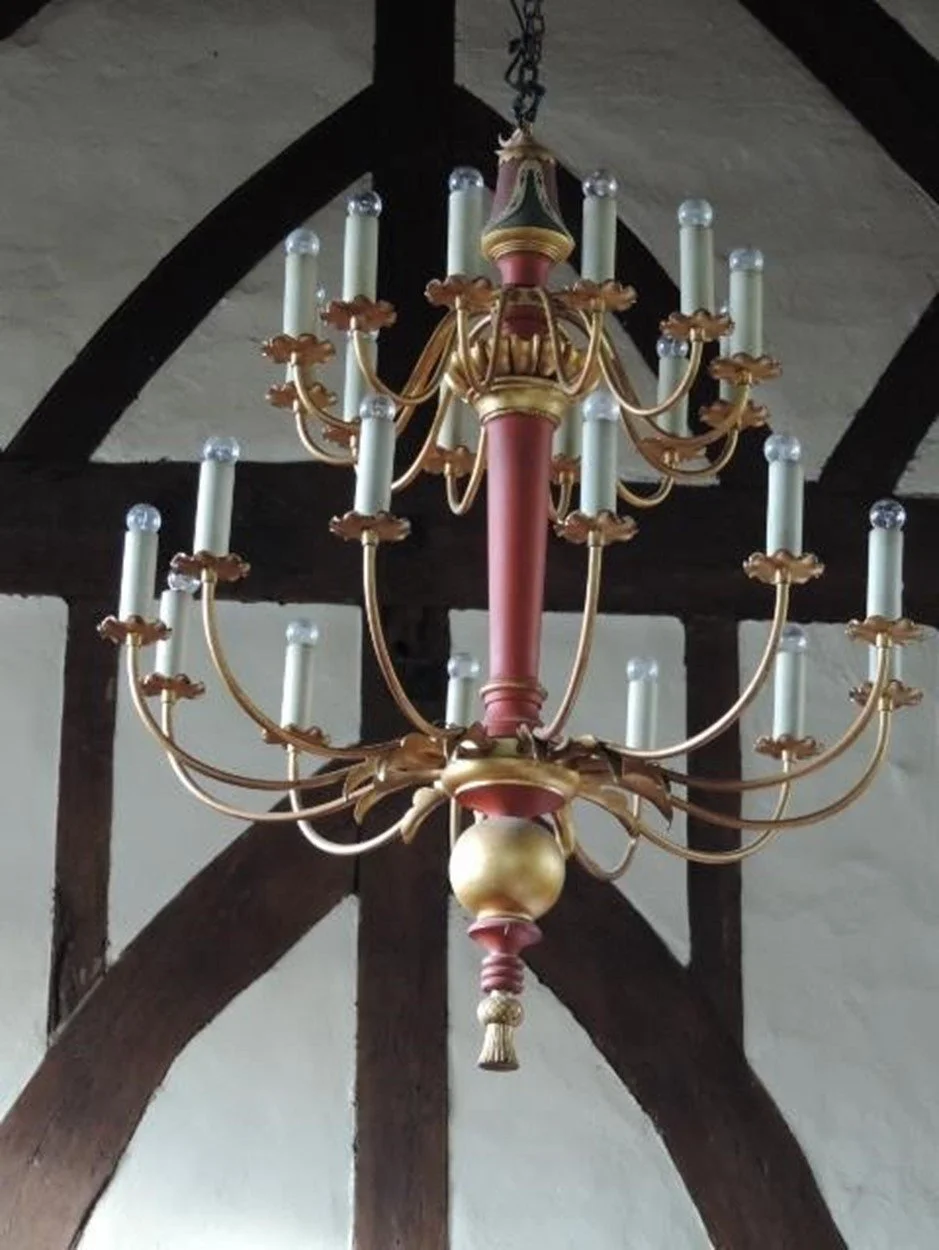
Until 1978 the Great Hall was lit by eight small chandeliers whose shades were apt to catch fire. Architect Francis Johnson recommended the three large chandeliers that hang there today.
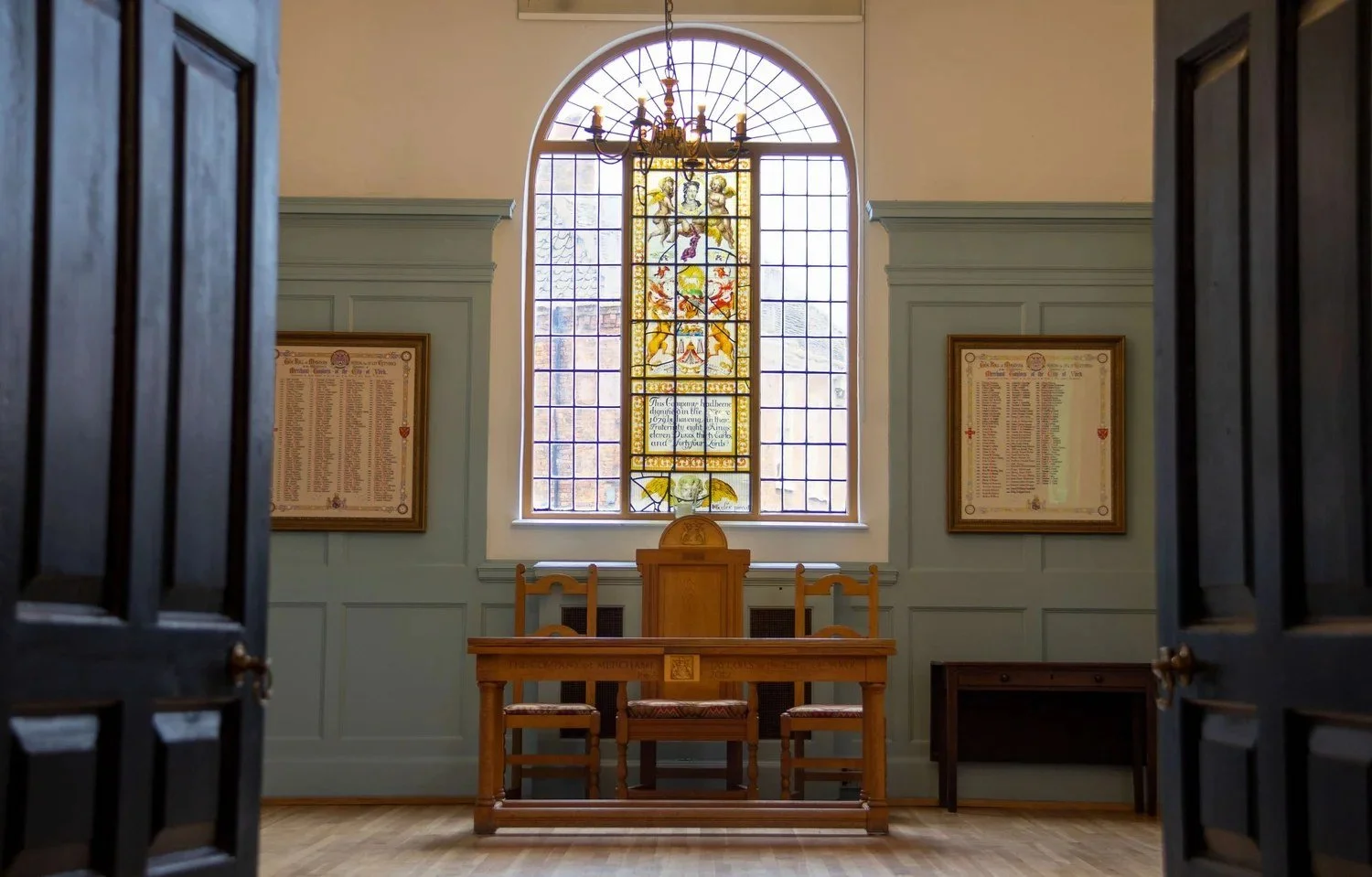
The Gyles Windows in the Blue Hall
The 1662 Buckton window is the earliest known work of the York glass painter Henry Gyles. Its panels spent the Second World War in a cellar at Thicket Priory.
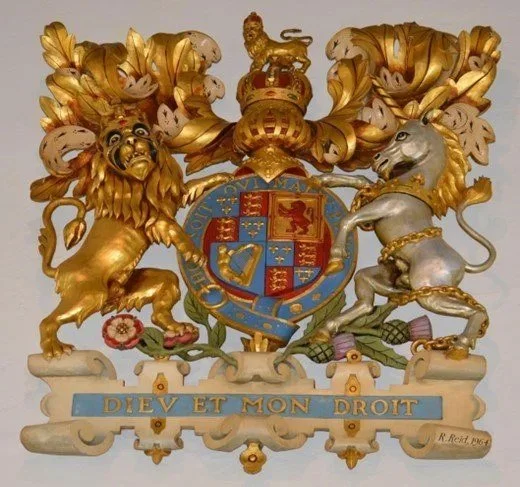
The Charles II Coat of Arms
The carved Royal Arms on the east wall of the Great Hall were commissioned in 1963 for the 300th anniversary of the Company's charter. They are signed by the carver, Dick Reid, and dated 1964.
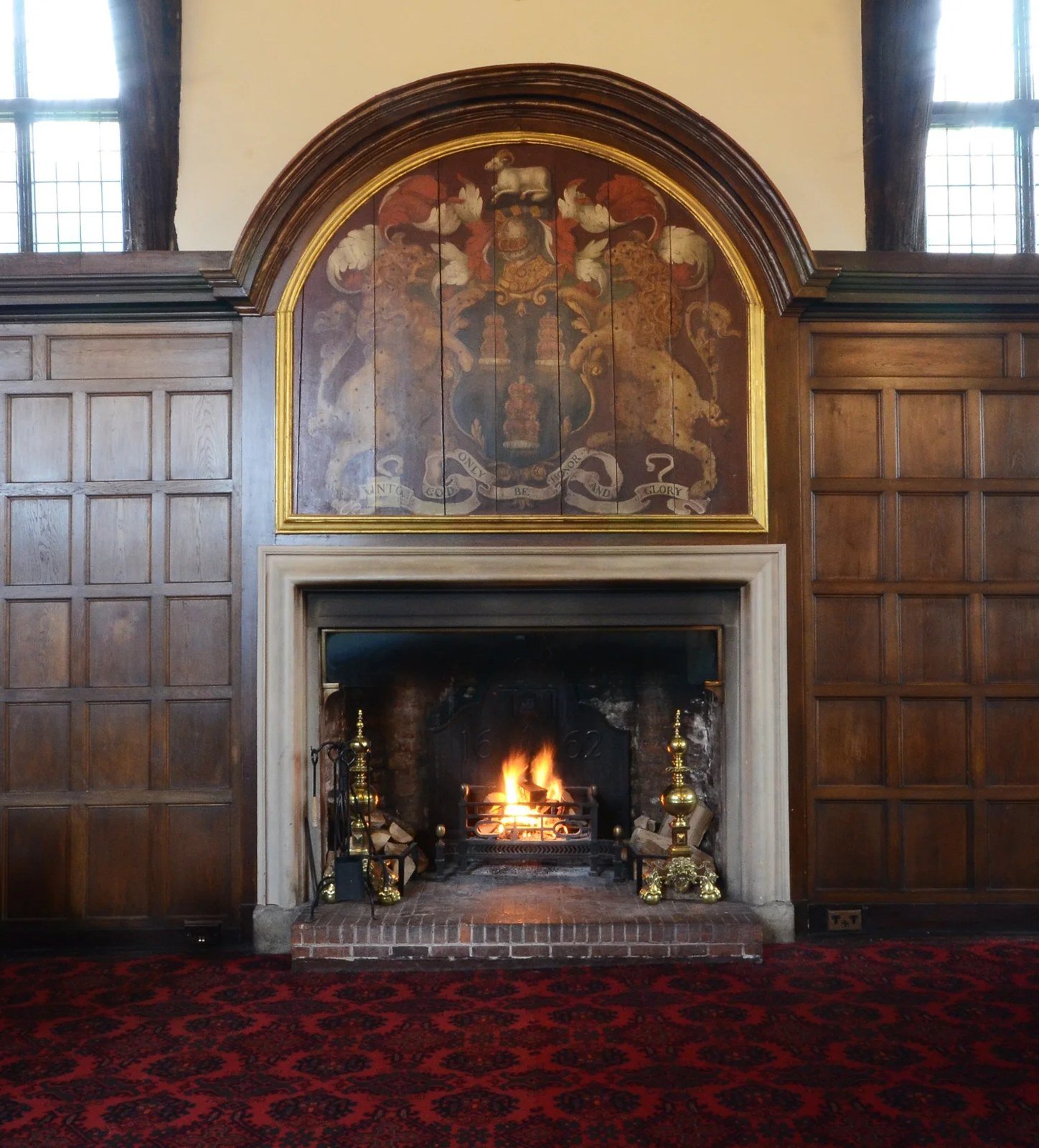
The Drapers' Arms
The arms over the Great Hall fireplace are those of the London Drapers' Company as they stood between 1613 and 1668. They probably mark the union of York's tailors and drapers in 1662.
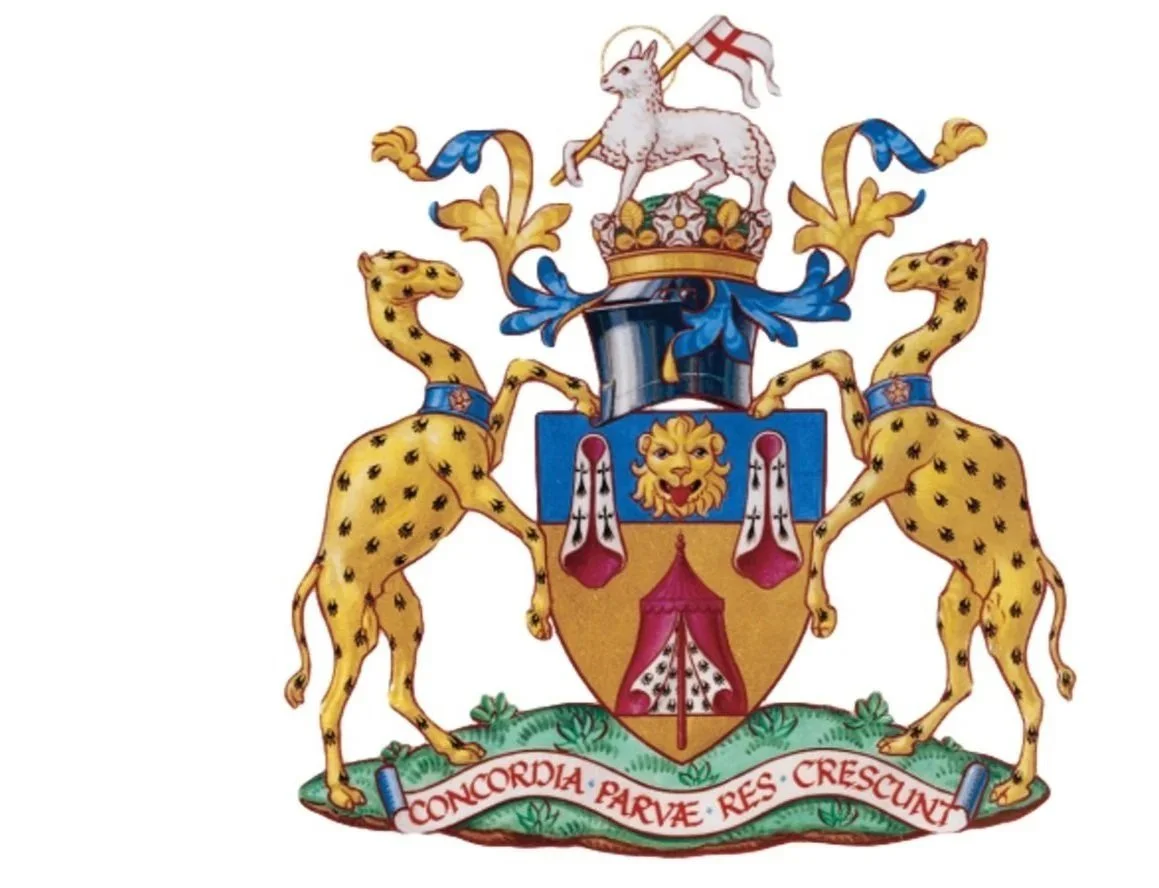
The Grant of Arms
The Company had no coat of arms of its own until Garter King of Arms granted one on 5 March 1963. The design is based on the arms of the London Company of Merchant Taylors.
The Stone Coat of Arms
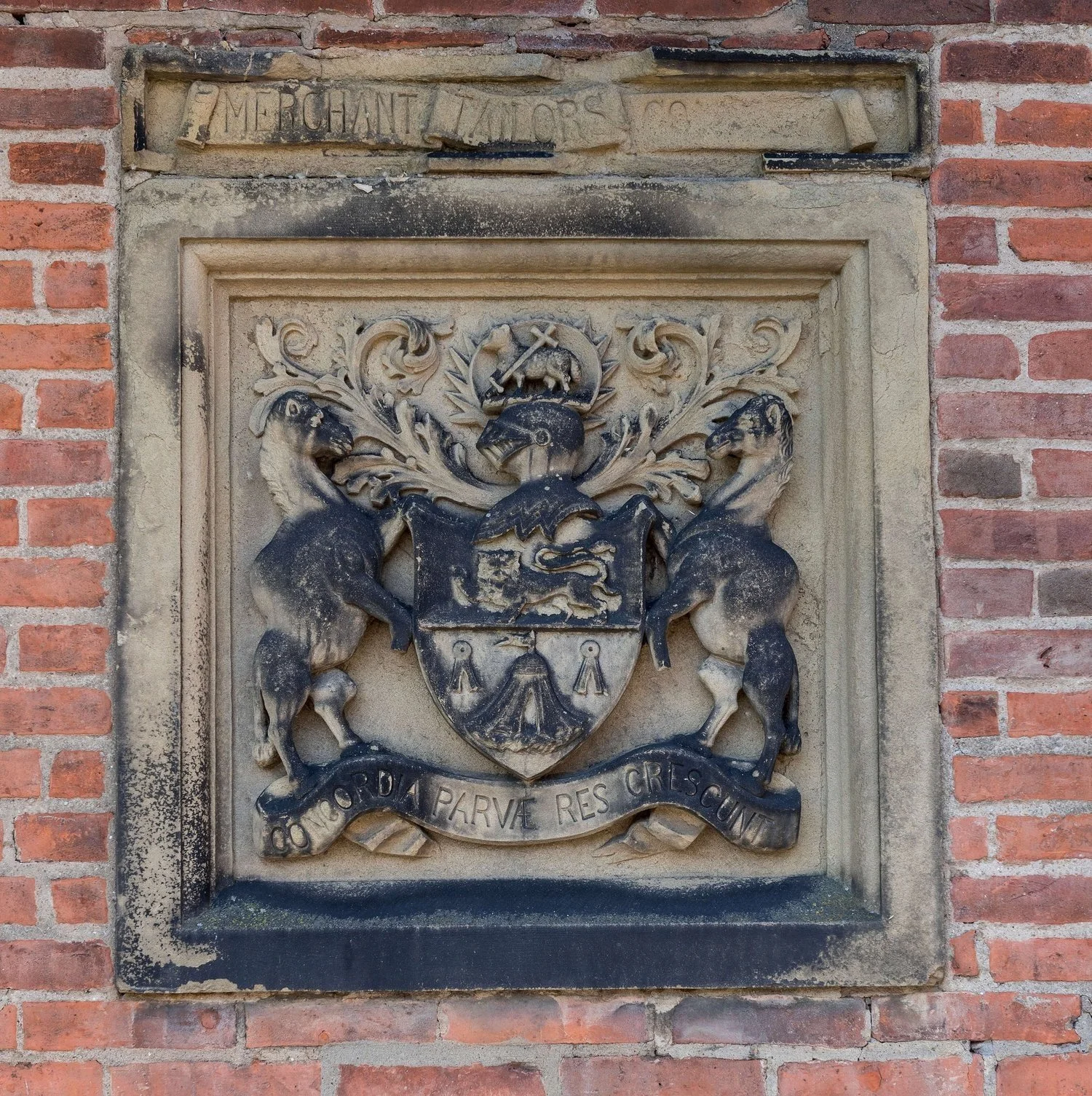
Carved in 1887 by George Walker Milburn for £8 4s 0d, these stone arms once stood over the archway from Aldwark. They now sit in the wall beside the forecourt.
The King's Tentmaker
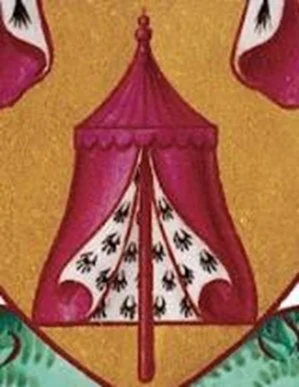
Why is there a tent on the Company's arms? A 1930 Charter Day speech linked it to John Yackersley, tent-maker to Edward II and Edward III.
The 1662 Charter of Incorporation
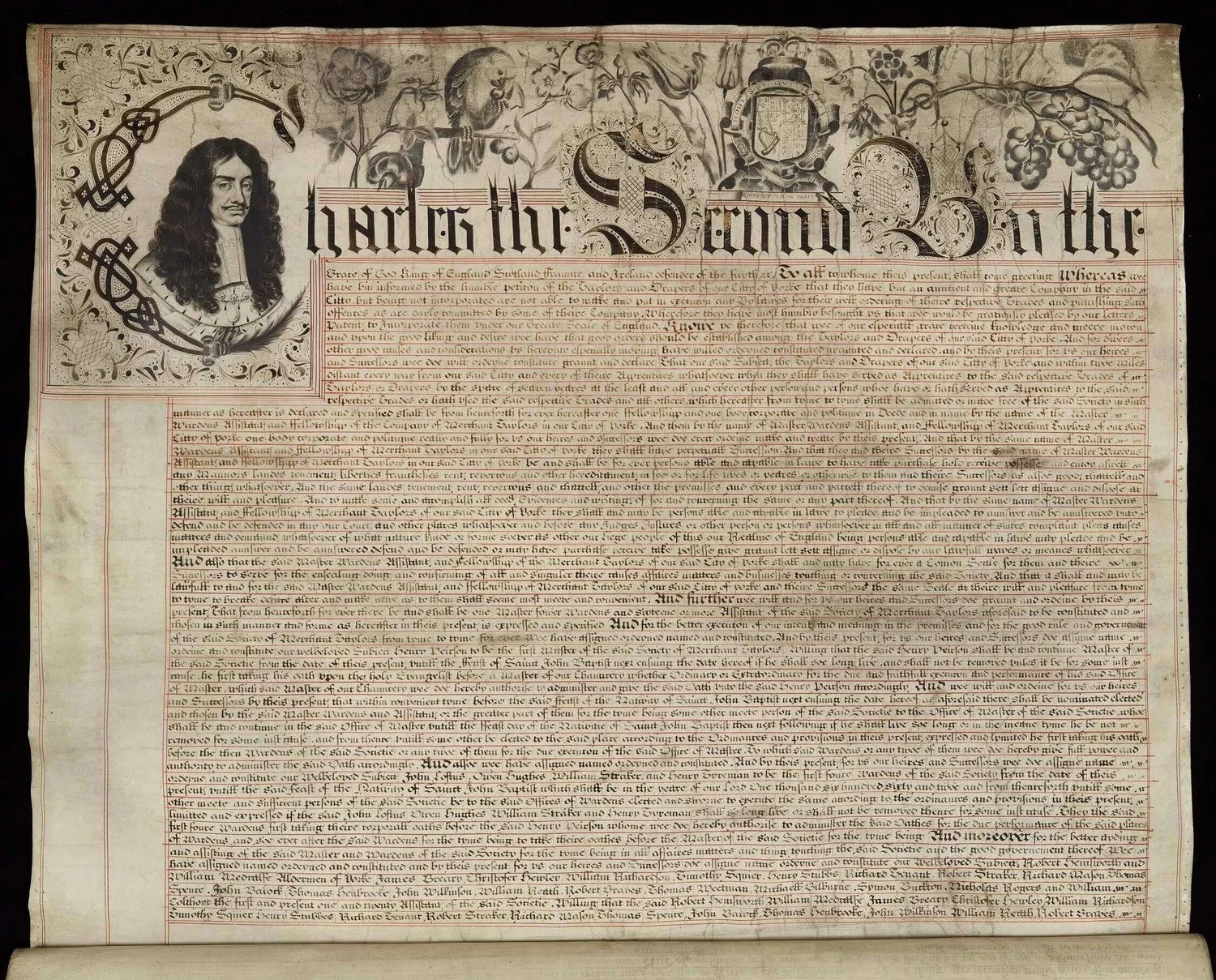
The Charter granted by King Charles II in 1662 united York's tailors and drapers as the Company of Merchant Taylors. It remains the Company's governing document.
A 1739 Indenture of Apprenticeship
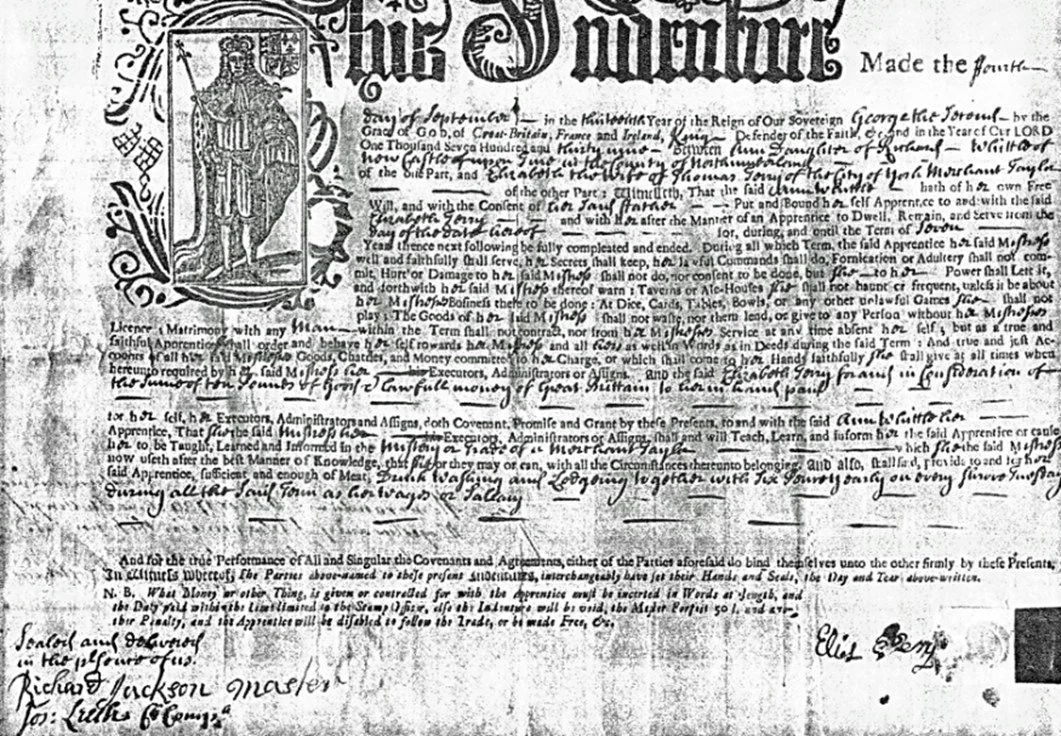
In 1739 Ann Whitten of Newcastle upon Tyne was apprenticed to Elizabeth Gerry, wife of a York merchant tailor. A full transcript of the indenture.
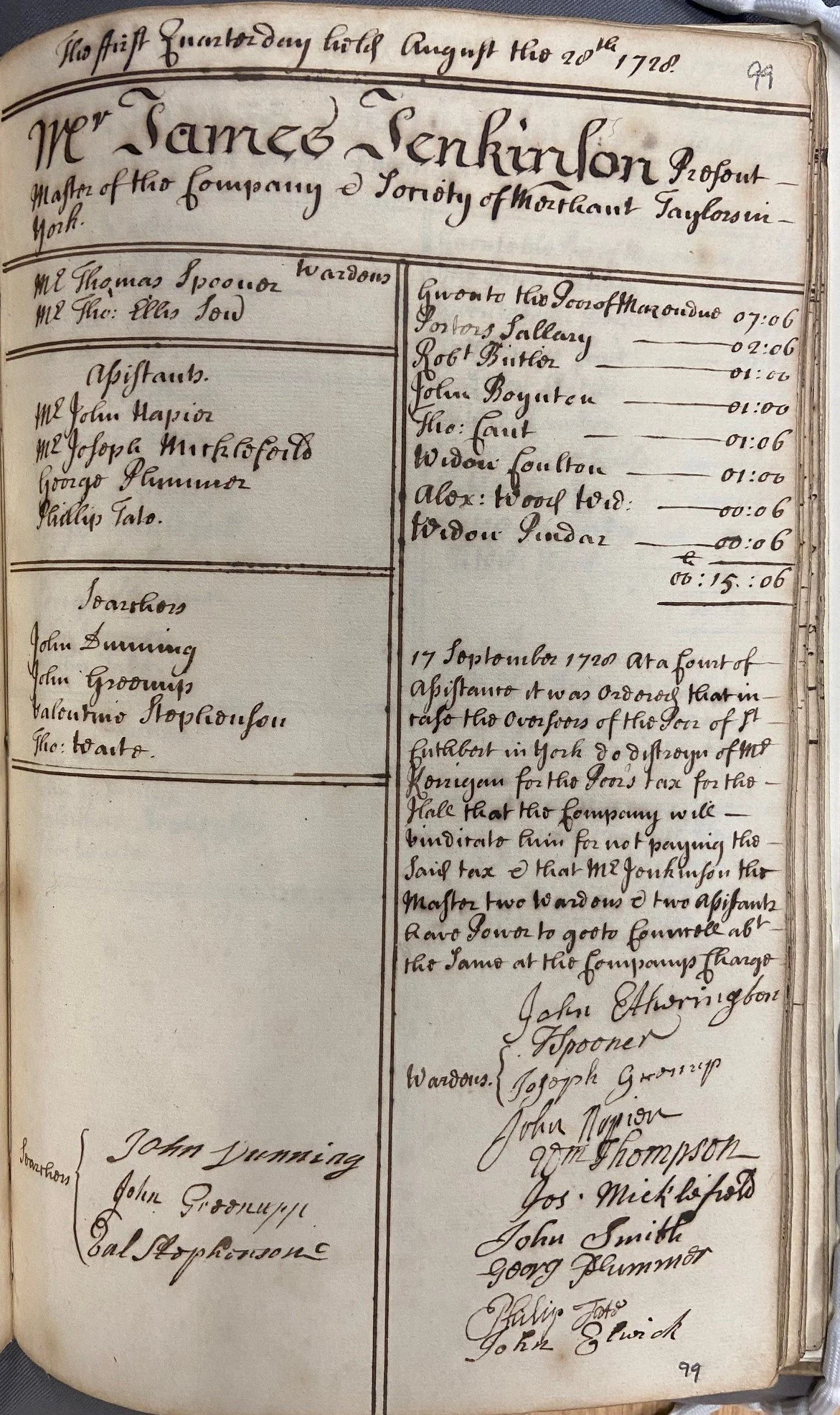
Extracts from the Company's Archives
From a will of 1390 to a warden fined for calling the Master a 'pitifull Curr', these extracts give a flavour of the Company's records.
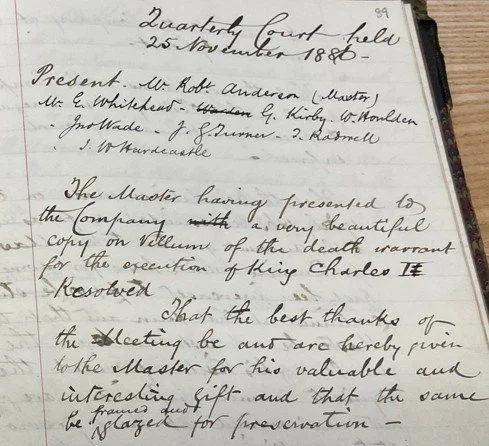
A Copy of the Death Warrant of King Charles I
In 1886 the Master presented the Company with a copy on vellum of the death warrant of King Charles I. Its whereabouts today are unknown.
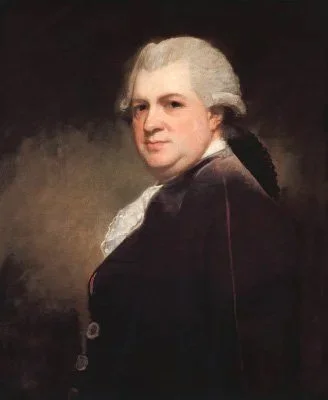
James Jenkinson and John Smeaton
James Jenkinson, Master in 1728–29, appears to have been the father-in-law of the engineer John Smeaton FRS. The records that support the link.