
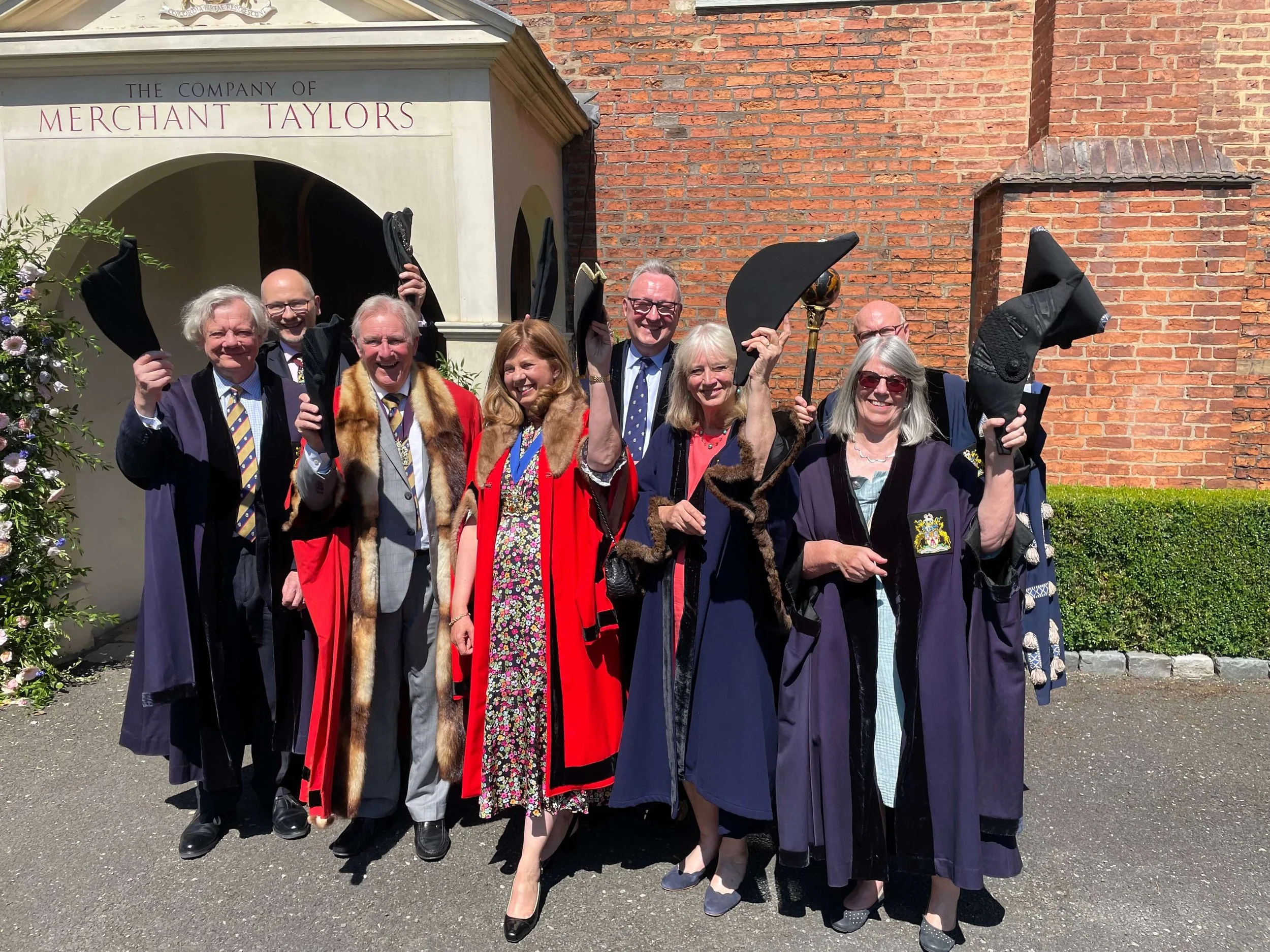
The Company of Merchant Taylors in the City of York
Tailors, drapers and hosiers of York since 1273
Charles II’s Royal Charter of 1662 united the Taylors and Drapers of York, but the Company’s roots lie in three medieval guilds of tailors, drapers and hosiers. Tailors appear among the City’s Freemen from 1273, and the guild’s earliest ordinances and register of members date from 1387.
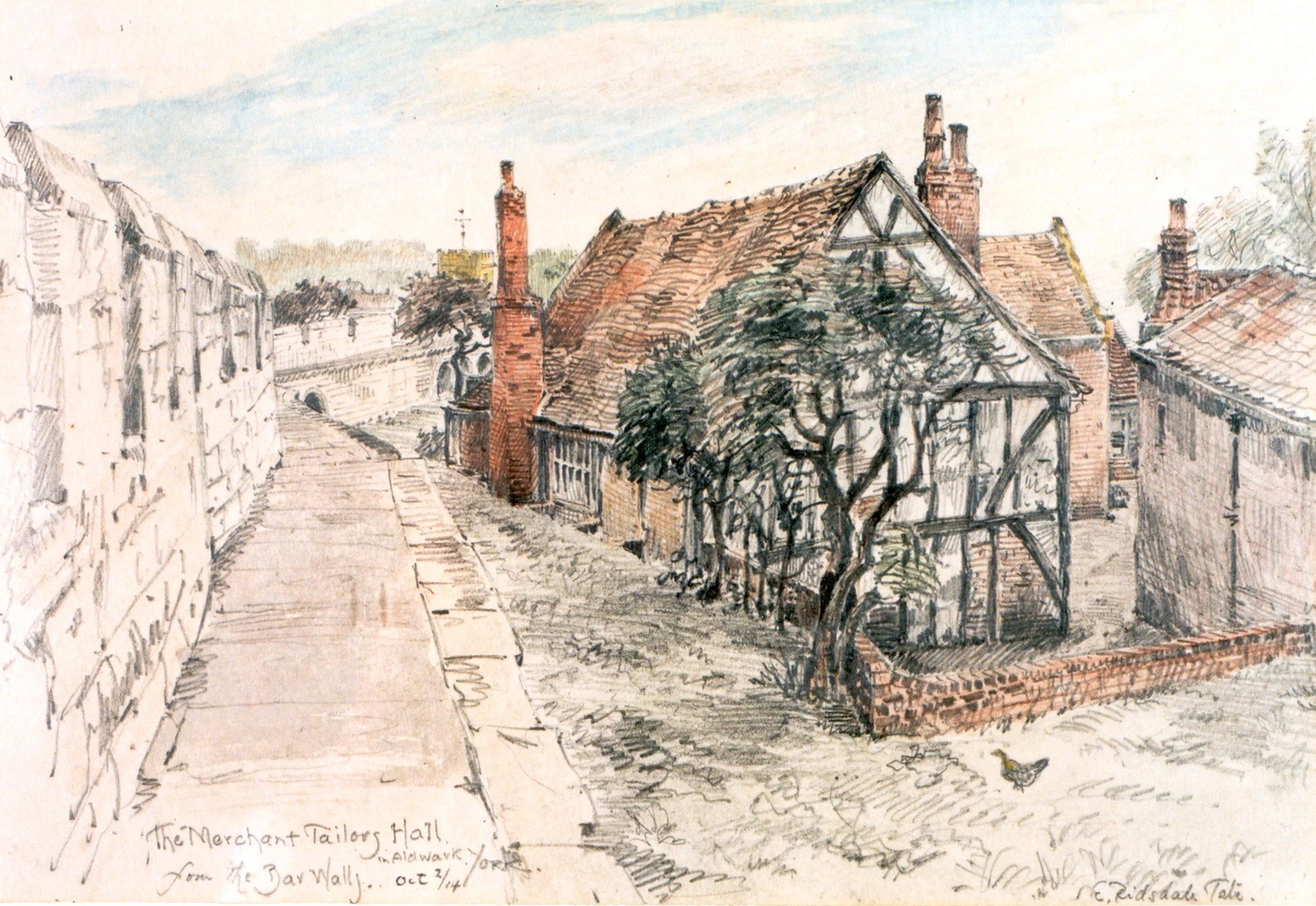
Six centuries of guild life
In medieval times the tailors were closely associated with the religious and charitable fraternity of St John the Baptist, the fraternity that built the present Hall. It was a golden age: the York Tailors played a major part in the social and economic life of the City, and in the famous York Corpus Christi mystery plays.
The records grow fuller from the reign of Elizabeth I. The earliest surviving Apprentice Register begins in 1605, and in its first four years 165 boys were apprenticed within the Company, most of them from Yorkshire villages near the City.
Until the 1830s the Company, which included a few women among its members, was a working body of master tailors. By leasing their Hall for schooling, theatre and entertainment, they kept their buildings standing when most medieval guilds lost theirs.
The Municipal Corporations Act of 1835 removed all guild restrictions on trade and brought the Company its greatest crisis. Yet its membership never lapsed, and from the late 1930s, thanks to York solicitor H E Harrowell and many others, the Great and Little Halls were restored to their former splendour.
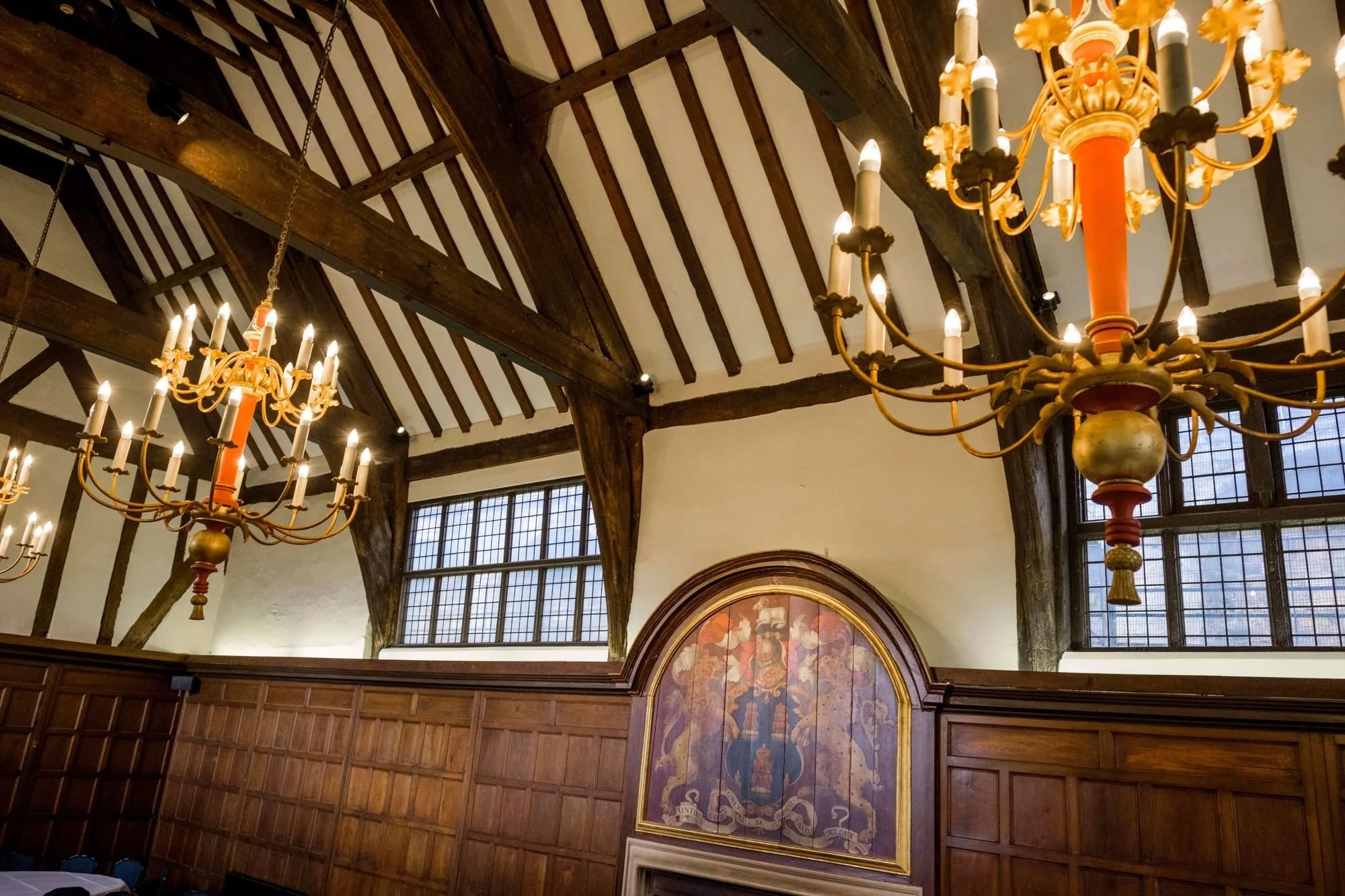
Two royal charters
1453: Henry VI
On 10 February 1453, at the request of fifteen York Taylors, Henry VI created a perpetual fraternity or guild of St John the Baptist, with the right to hold property, a Master and four Wardens elected every Midsummer, and its own livery.
1662: Charles II
On 26 April 1662 Charles II granted his Royal Charter of Incorporation to the united Company of Taylors and Drapers of York. The charter is still in the Company’s possession, and a framed copy hangs in the Hall entrance.
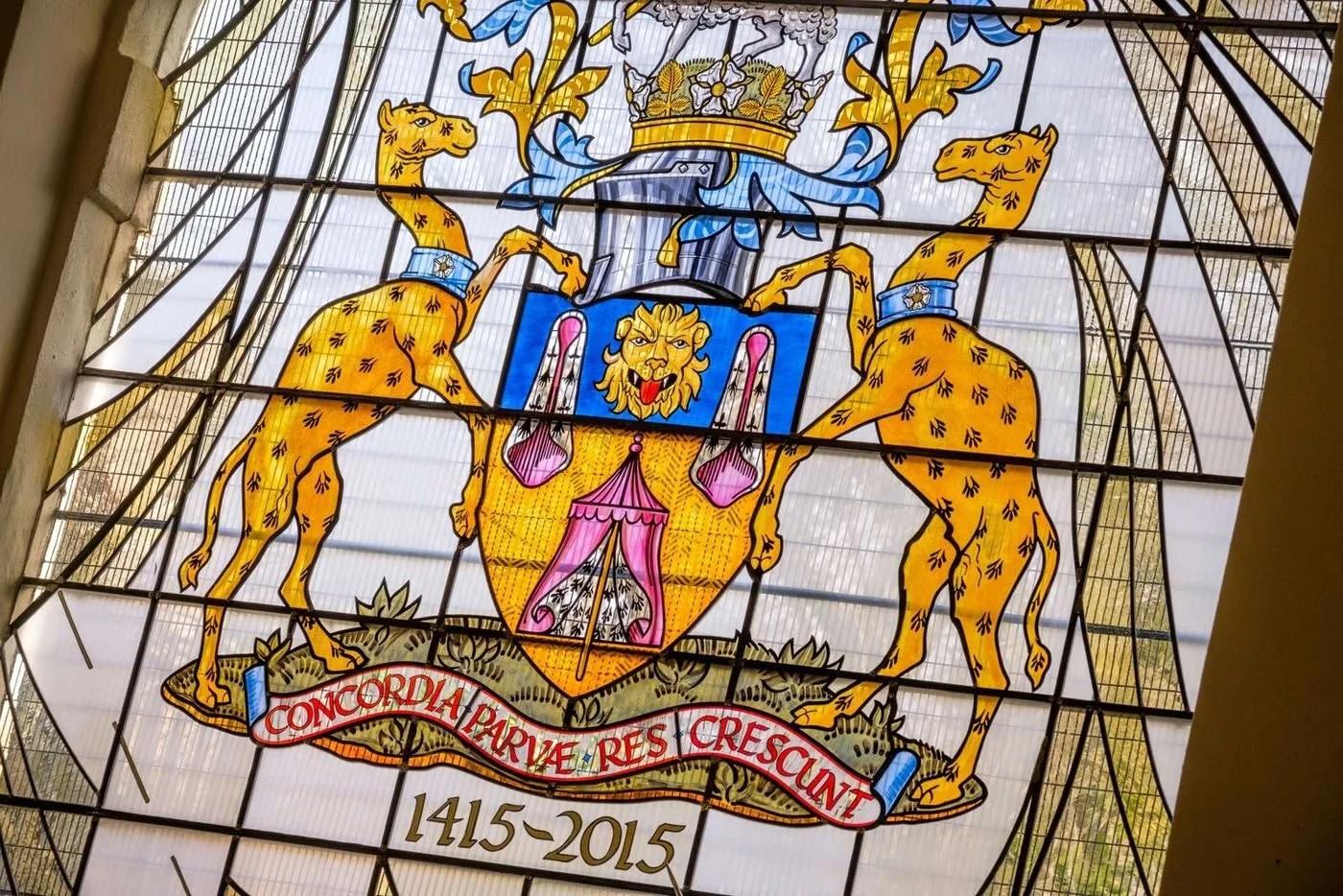
Read the arms
The Company had no arms of its own until 5 March 1963, when the Garter King of Arms granted them. The shield shows a purple pavilion on gold, a pavilioner’s tent of the kind tailors made for jousting, beneath a gold lion’s head on blue, with two robes of estate in ermine.
The crest’s Paschal Lamb is a symbol of St John the Baptist, the Company’s patron saint. One theory is that the camel supporters recall St John’s garment of camel hair. The motto, Concordia Parvae Res Crescunt, means ‘With harmony small things flourish’.
The Company archive
The Company’s ancient archive is held on loan at the Borthwick Institute, University of York, and can be seen on request. Membership records survive from the mid-16th century and apprenticeship records from the early 17th. The most important document is Charles II’s charter of 1662. For the stories behind the records, explore the Wilford Archive, curated by long-standing member Graham Wilford.