
The History of Merchant Taylors' Hall, York
A National Monument, built in 1415, the year of Agincourt
One of the finest surviving medieval guild halls in the world, Merchant Taylors’ Hall has stood at the heart of York for over 600 years. A Grade I listed building on Aldwark, it comprises the Great Hall, the Blue Hall, the Almshouse and formal grounds.

The Great Hall
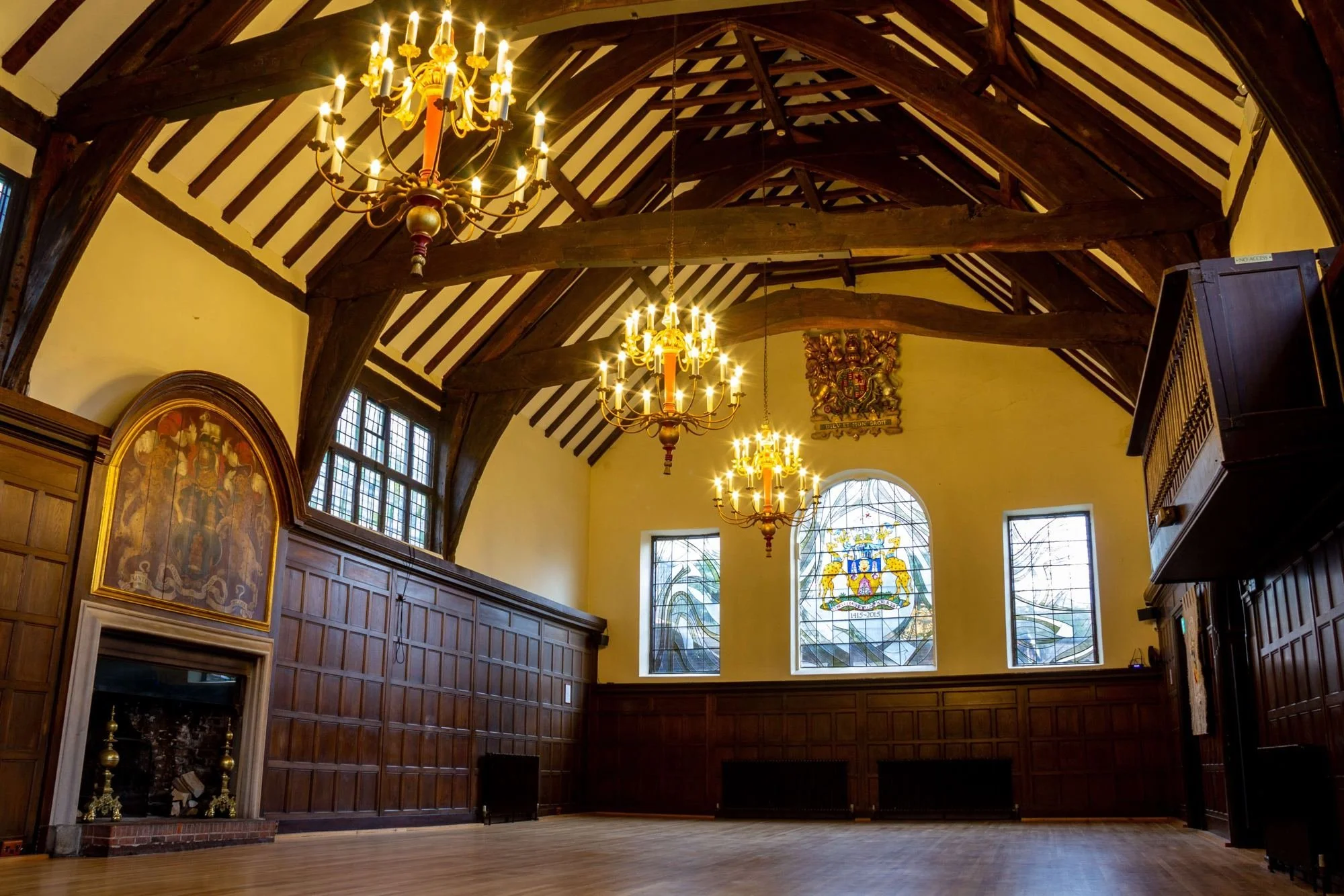
The Great Hall is an architectural masterpiece. Its width and height are equal, and the length is twice that dimension — forming two perfect cubes side by side. The roof timbers are fully exposed, revealing an unusual combination of two structural systems: triangular trusses with a central post and braces, and two great curved arches. At the west end lies the Entrance Hall, formed from the original screens passage — one of the very few surviving in England today. The Waits or Minstrels' Gallery, referenced in 1694 and believed replaced around 1725, is one of the Hall's most distinctive curiosities. Above the fireplace hang the London Drapers Company Armorial Bearings, painted on wood before 1668.
The Blue Hall
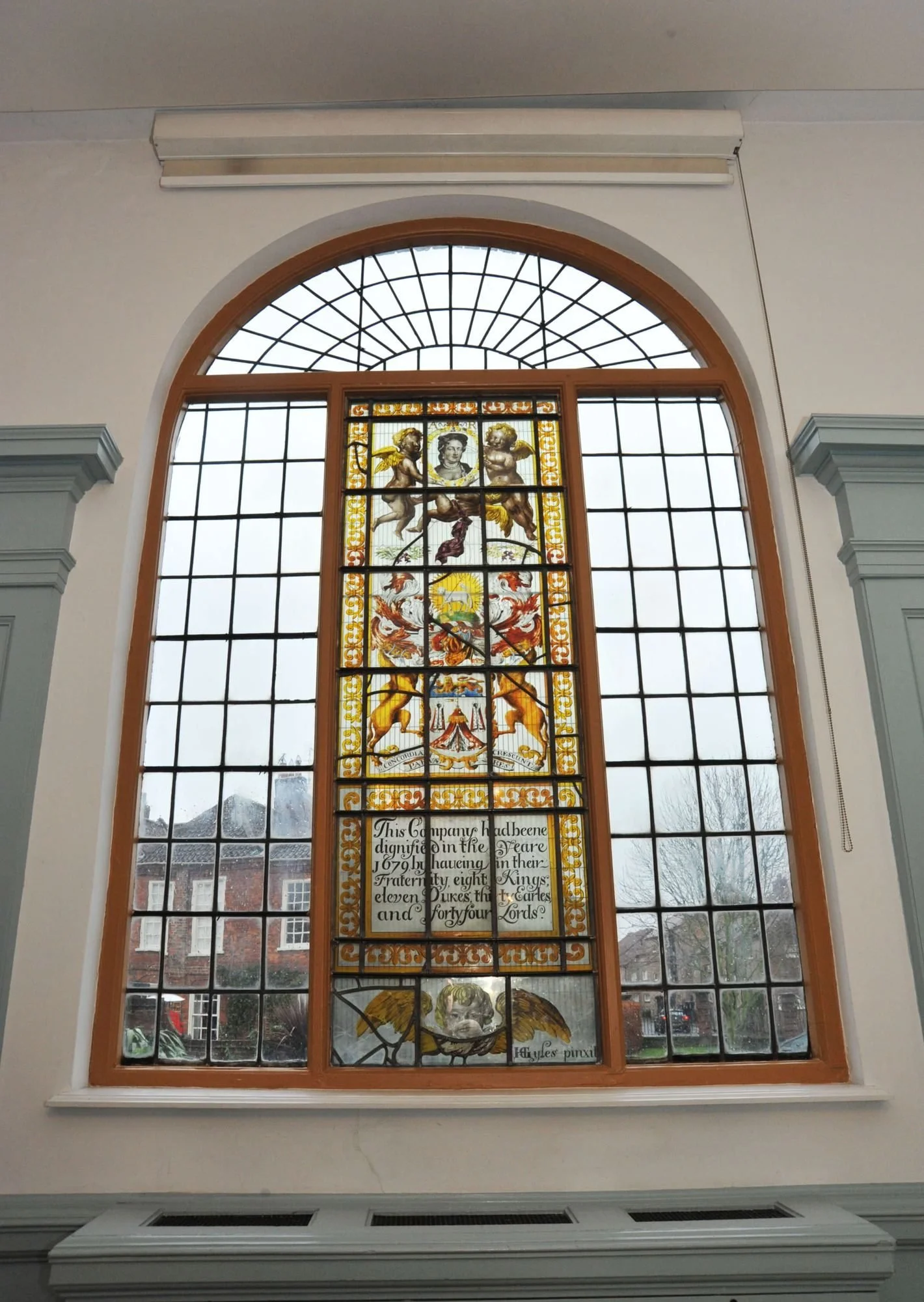
Added in the late 15th century at right angles to the Great Hall, the Blue Hall was originally known as the 'Counsell howse' — later the Counting House and Small Hall — and may have also served as a chapel. It houses two remarkable stained glass windows by York artist Henry Gyles. The oldest, dating to 1662, is Gyles' earliest known work — a gift of Simon Buckton, a wealthy merchant tailor. The second depicts a bust of Queen Anne and the coat of arms of the London Company of Merchant Taylors, commemorating the restoration of their London Hall after the Great Fire of 1666.
The Commemorative East Window
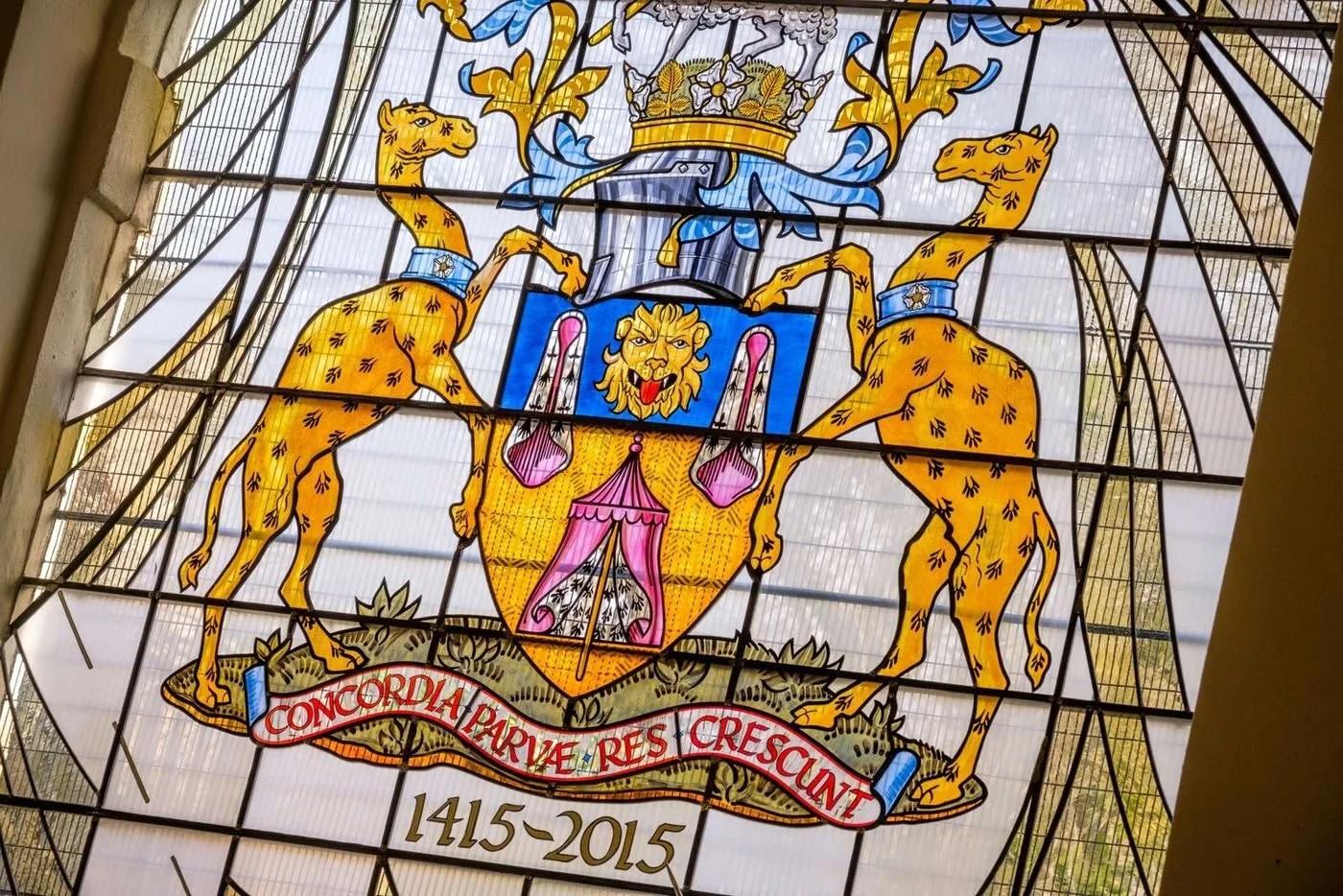
In 2014, dendrochronological investigation confirmed the Great Hall's build date as 1415. To mark the 600th anniversary, stained glass artist Helen Whittaker MBE and Master Glazier Keith Barley MBE were commissioned to create new windows for the east end of the Great Hall.
The Hall's coat of arms forms the focal point of the central window, depicted as if sewn onto silk, with anniversary dates 1415–2015 embroidered in gold thread below.
From 1273 to today
1273
Tailors first appear in York’s Freemen’s rolls.
1387
The earliest surviving ordinances and register of members of the tailors’ guild.
1415
The Great Hall is built, in the year of Agincourt.
1453
Henry VI grants a Royal Charter, incorporating the guild of St John the Baptist under a Master and four Wardens.
Late 1400s
The Blue Hall is added at right angles to the Great Hall.
1551
The tailors merge with the Drapers and Hosiers.
1662
Charles II’s charter unites the Company of Taylors and Drapers of York. Henry Gyles makes his earliest known window for the Hall.
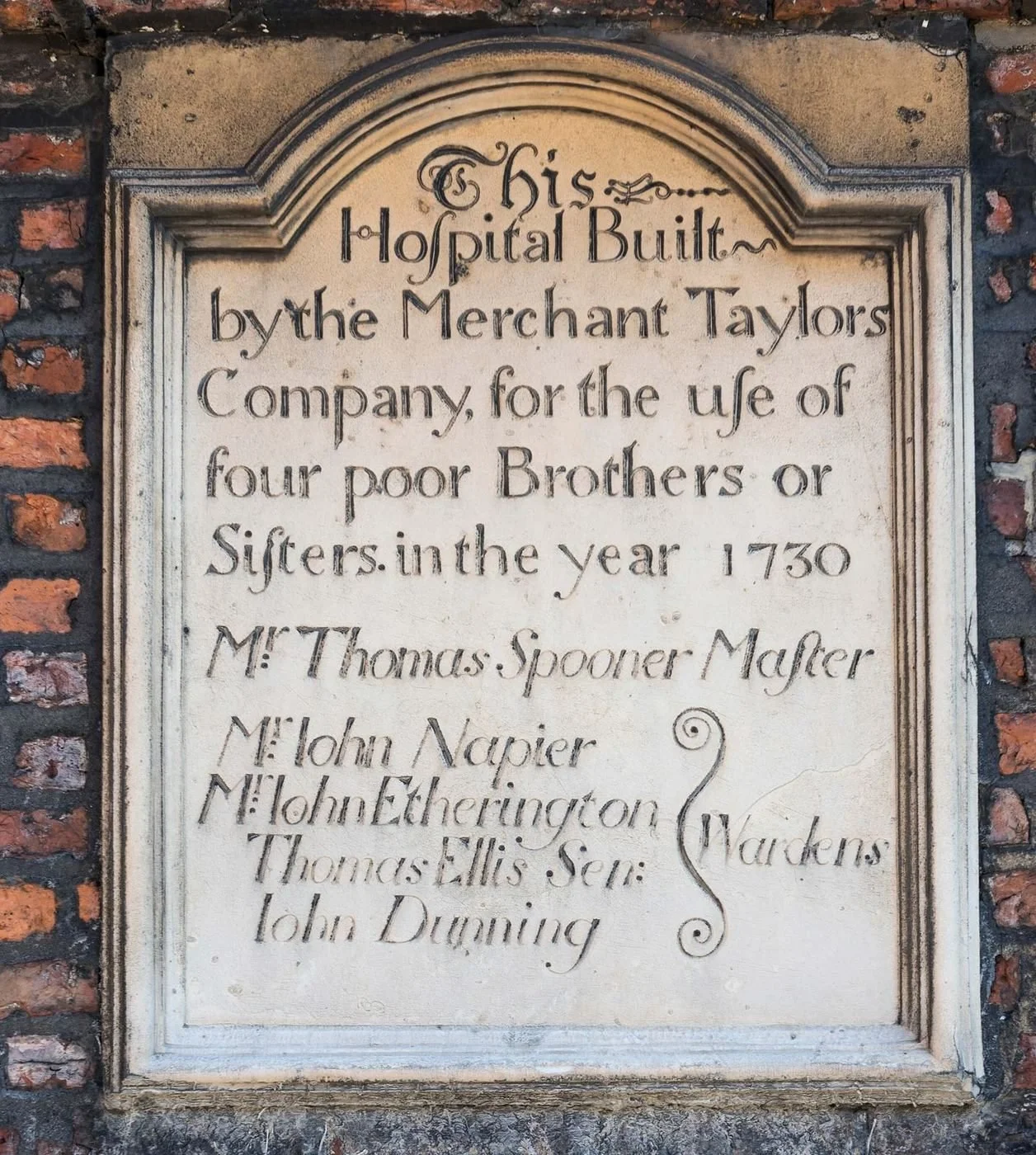
1730
The almshouse is built to house four elderly Tailors.
1963
The Company is granted its own coat of arms.
2014
Tree-ring dating of the roof timbers confirms the 1415 build date.
2015
The commemorative east window marks the Hall’s 600th anniversary.
The Grounds and Gardens
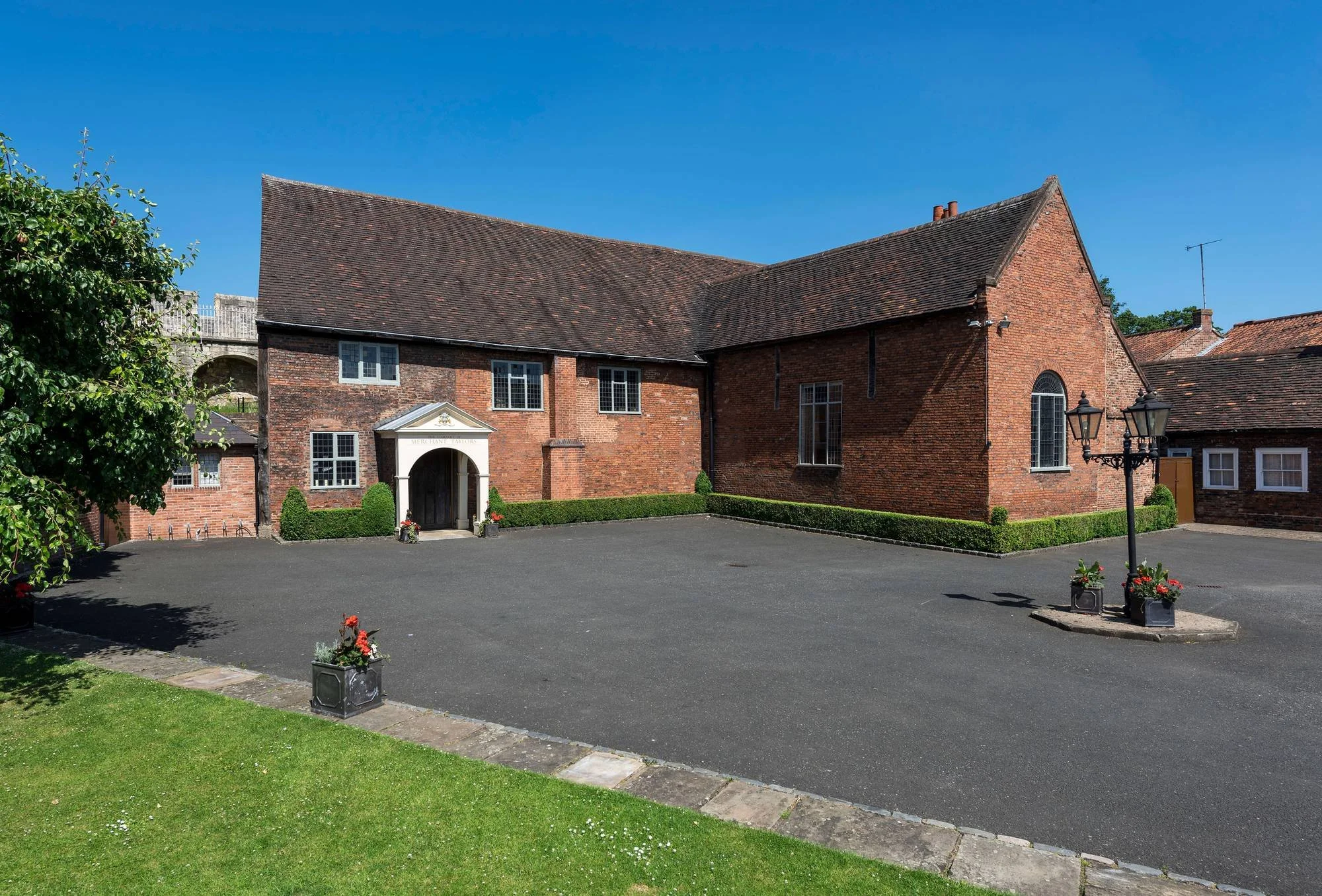
Until the 1960s, the Hall was hidden from public view by a terrace of buildings fronting onto Aldwark. When the 1887 archway was demolished,
the stone coat of arms was saved and built into the new boundary wall.
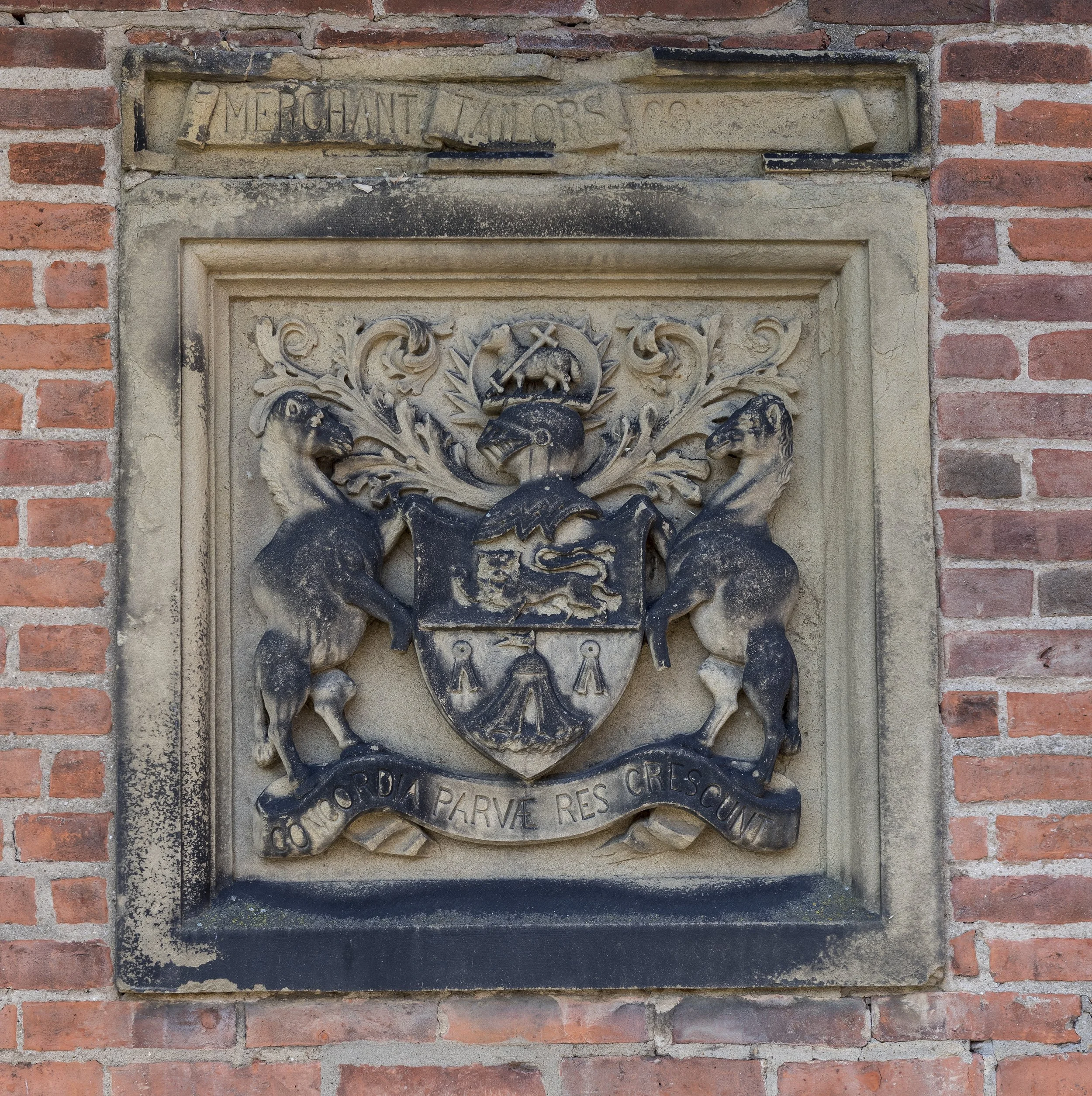
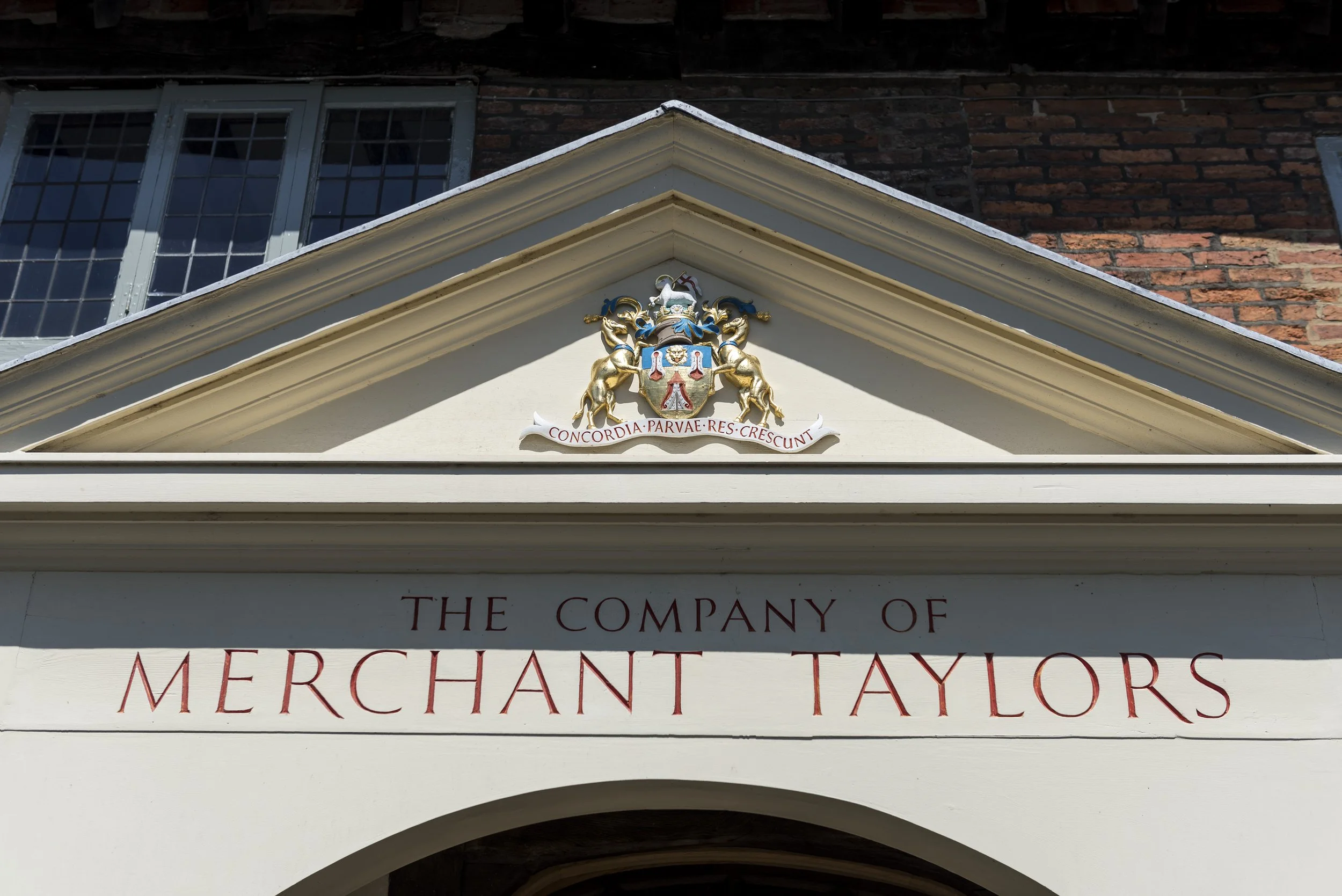
Today the Hall has a splendid forecourt and historic garden — a serene setting enjoyed by members, visitors and event guests alike.
The Almshouse
On one side of the Hall stands the Almshouse, built in 1730 to house four elderly Tailors — men or women from the very start of the Guild. The original Trust Deeds described them as 'decayed Taylors'.
Built on the original site of the Maison Dieu, demolished in 1702, the Almshouse today forms a single tenanted dwelling.
The Wilford Archive
A rich trove of miscellaneous information, Images, Documents, and a mix of contemporary and medieval facts about the Merchant Taylors of York, collected over many years of careful conservation. This sometimes quirky collection has been carefully curated by Graham Wilford, a long-standing member of the company.